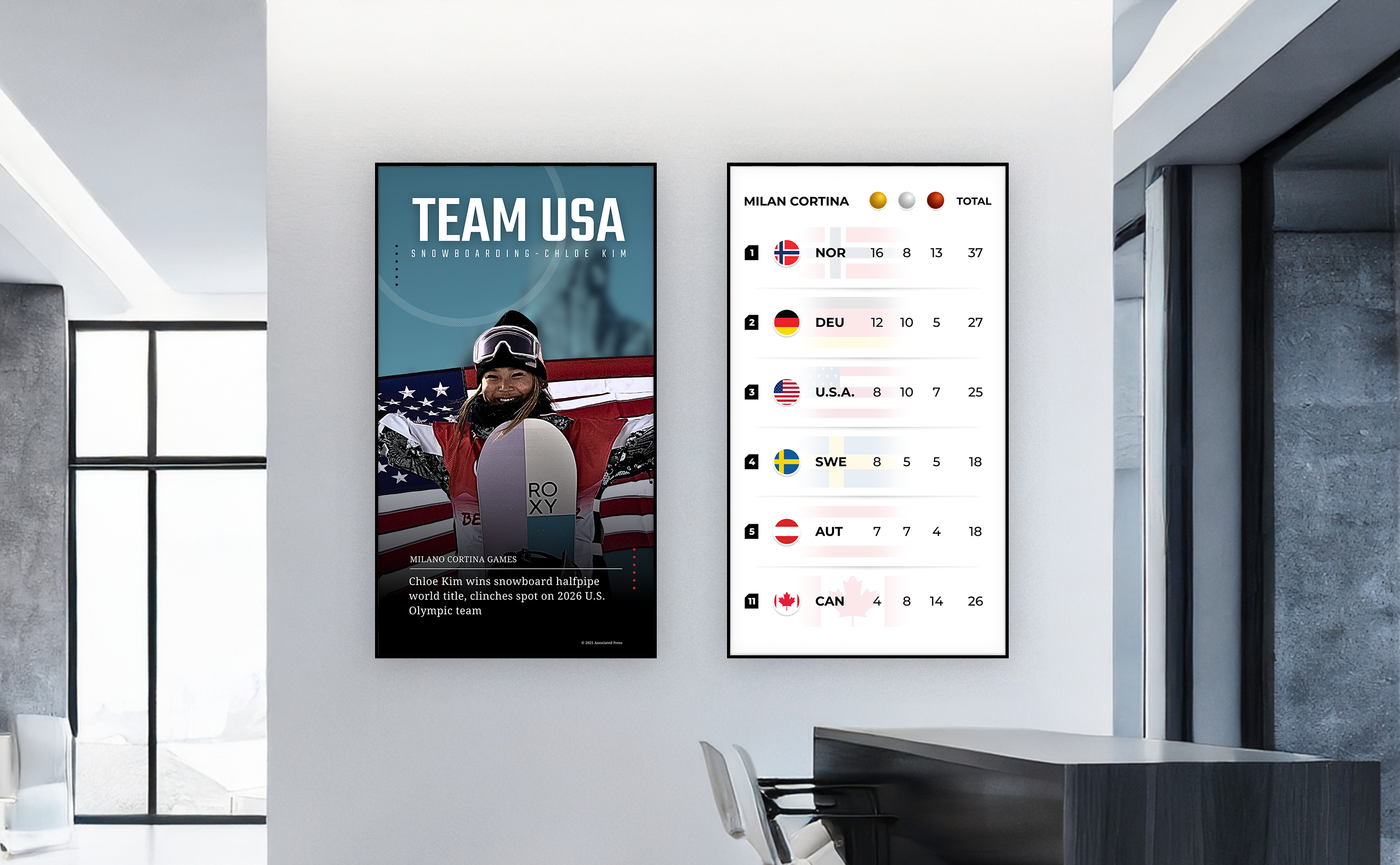
Weather feeds and widgets have been popular in playlists for decades, and consistently deliver results in digital signage. Learn what’s made weather a pillar of content strategy since day one, and how it continues to evolve today.
Take a look around, and you’ll notice weather content on many digital signs. It’s a fact that current temperatures and forecasted conditions perform well when added to any playlist or template. Displaying weather increases local relevance, earns audience attention, and strengthens the overall impact of a content strategy.
The result has made weather popular in playlists everywhere. Through decades of changing industry trends, shifting audience needs and software platform evolutions: weather remains on-screen. Screenfeed can confirm that weather has been a top-selling feed since 2008.
Together, we’ll dive into how weather content earned its place as a digital signage staple, and the creative new ways it can serve your network today.
Early on, networks discovered that audiences responded best to content that was immediately useful. Weather checked this box perfectly. Keeping tabs on the weather is a must because it changes by the minute, and dictates how people move about their day. This meant that screens featuring current temperatures and forecasted conditions delivered instant value to viewers, and cemented the utility of weather in digital signage.
Weather transcends demographics, industries, and venue types of all kinds. That universal application is rare in content strategy, which is a big part of what makes it so valuable and why it was adopted early in networks.
The success of digital signage weather content isn't magic or coincidence. It comes down to a few core factors that align with how audiences actually engage with screens in public spaces.
Weather content can be localized with pinpoint accuracy, filtering results based on city, postal code, or latitude and longitude coordinates. When a viewer is able to see what to expect for their neighborhood, commute, or afternoon plans - the content speaks directly to them. Localization is one of the most powerful tools in any content strategy, and weather easily delivers.
A quality weather feed updates constantly. This means the content itself is never stale, never outdated, and always accurate to the moment. It also increases perceived freshness for other playlist content that might not update as often. For network owners who understand the importance of keeping content fresh and maintenance low, this is a significant advantage.
Weather content doesn't ask much from a viewer. A quick glance is enough to gather useful information, which makes it an ideal companion to other content in a loop. It respects the audience's time and headspace.
When audiences know a screen reliably shows them something useful (such as temperature, upcoming rain, or windchill) they build a habit of checking it. That naturally earned attention should be the goal of every content strategist.
As the industry grew, the increase of digital displays in public spaces created attention fatigue. As a result, audiences evolved to ignore screens and content that doesn’t serve them. When content feels generic, overly promotional, or disconnected from the environment, it gets tuned out fast.
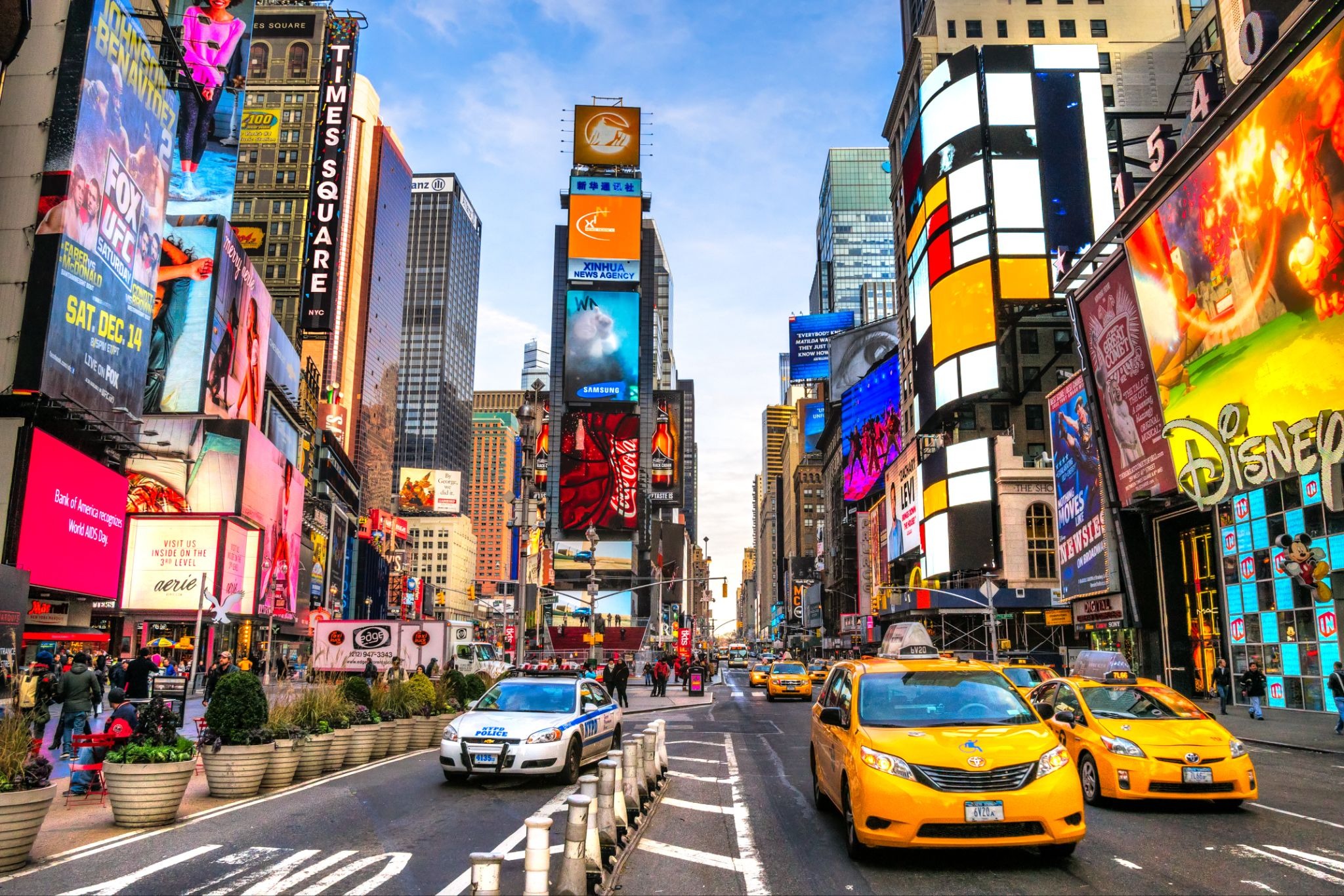
Relevance helps cut through the noise. Content that speaks to where someone is, what time of day it is, what they're likely thinking about is more likely to earn attention and engagement. A screen that consistently delivers relevant content builds credibility with audiences. It becomes a resource rather than a distraction. Weather content contributes meaningfully to that credibility.
As audience expectations have evolved, so has their visual taste. A basic temperature reading is a great starting point, but today's viewers are used to richer visuals, personalized experiences, and content that feels crafted rather than templated.
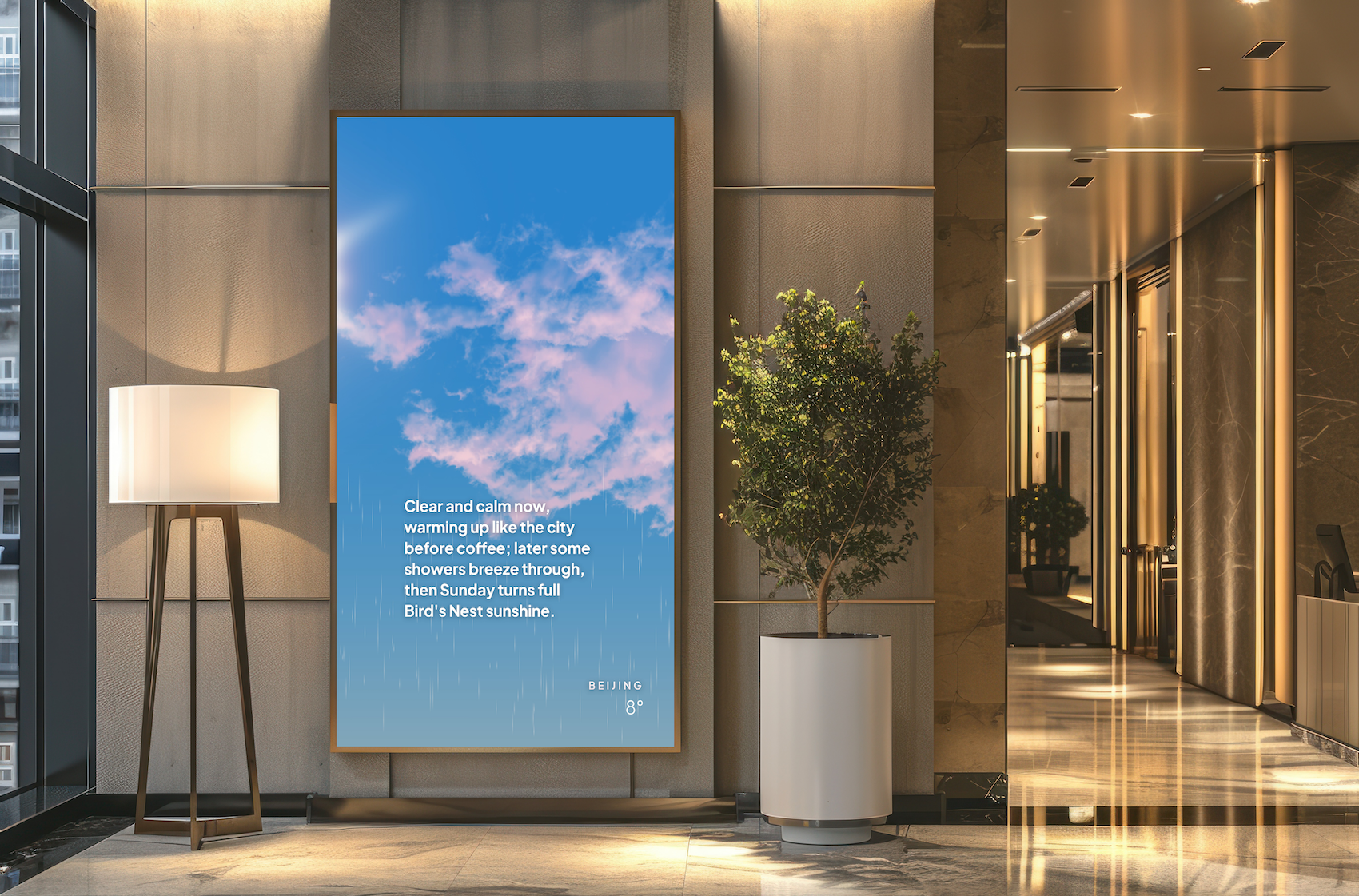
Weather content such as Cinematic Skies is an example of what modern digital signage weather should look like. Pairing dynamic skyscapes that reflect current conditions with AI-curated local summaries, Cinematic Skies combines personality with traditional weather.
Network owners can customize the voice styles to be Funny, Professional, Localized, Friendly, Playful, be based on Song Lyrics, or even Poetic. Each deployment will have a distinct feel that matches the vibe of a certain space and audience.
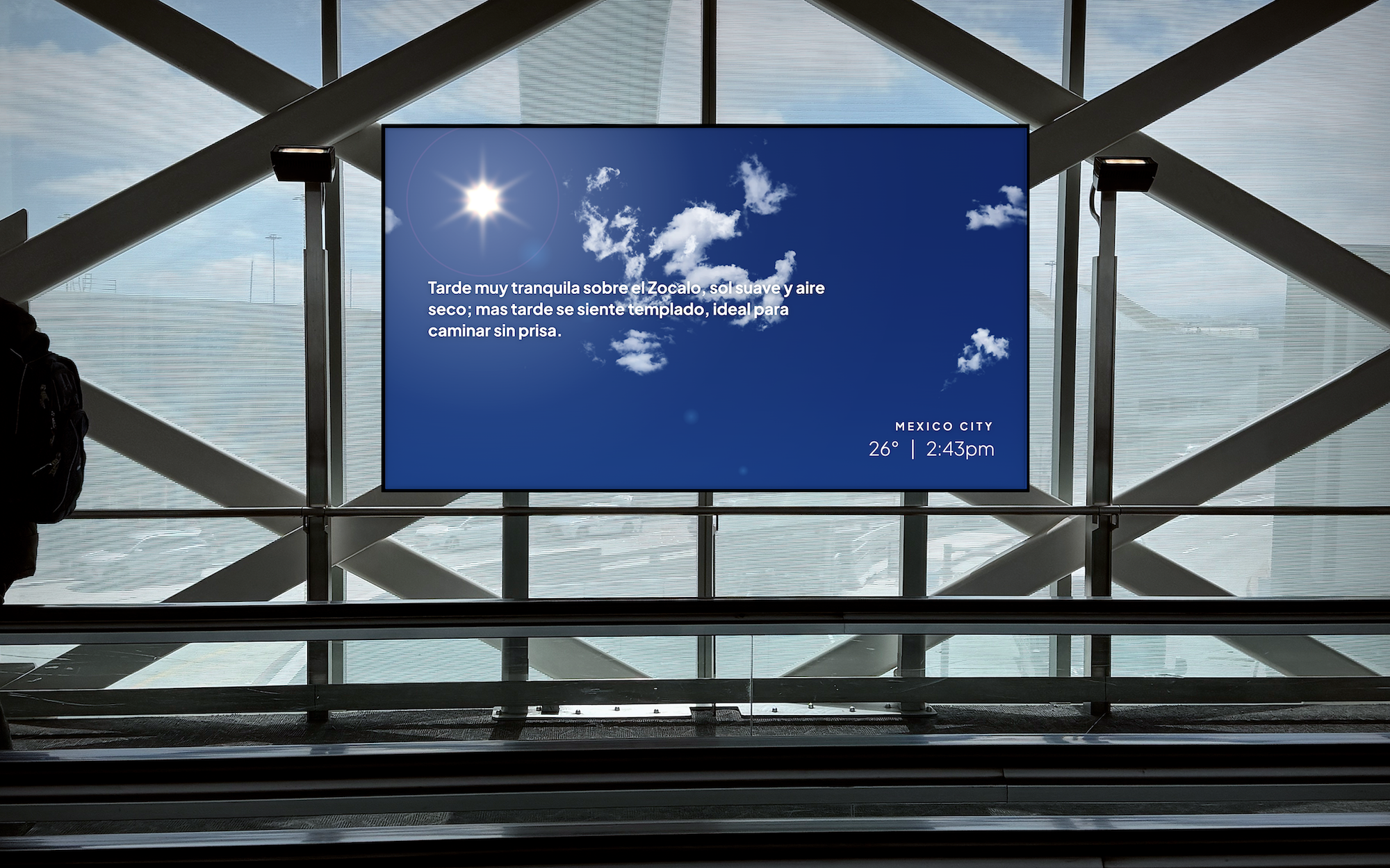
Cinematic Skies is also feature-rich with geolocation, meaning the content is automatically localized and requires no localization settings across players.
However, the true highlight is the visual presentation: animated backgrounds that match the conditions outside create a level of visual quality that feels tailored to modern displays.
It's a feed that takes what’s always worked with weather content, and integrates creative and AI-driven capabilities that today's audiences respond to. For networks that have relied on weather as a content staple for years, Cinematic Skies is a natural evolution. For anyone building a new content strategy, it's a strong starting point.
Weather content for digital signage has truly earned its seat at the table. Not through trend cycles or marketing, but through consistent performance over the industry’s lifetime. It works because it's local, it's useful, it's always fresh, and it gives audiences a genuine reason to engage with a screen.
The bar for audience relevance will continue to rise, and competition for attention will become even more competitive. Leading with content that reliably delivers value isn't just a good idea, it’s strategically necessary. New content like Cinematic Skies will continue to drive innovation, so networks can get more creative with their strategies.
Have questions about building a content strategy around weather? Or, want to explore what Screenfeed's weather feeds could look like in your network? Build your first Cinematic Skies feed here or send a message to sales@screenfeed.com.